

Electric Vehicles in India 2025: Growth, Challenges & Future
Introduction
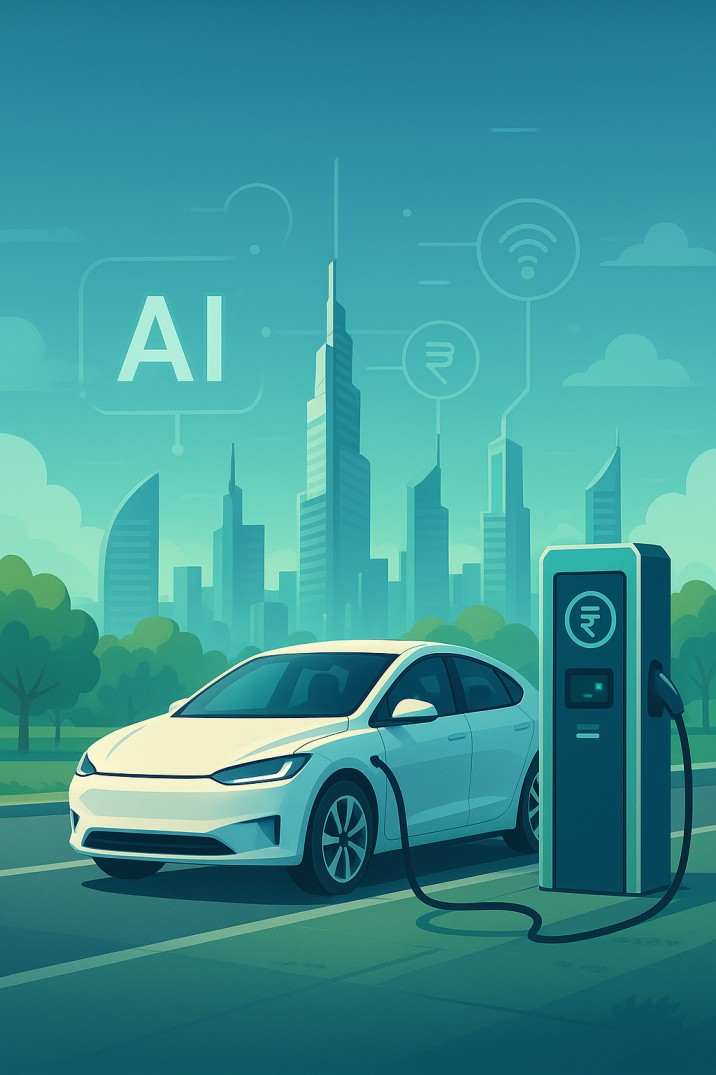
India’s roads are changing. Just a few years ago, electric vehicles (EVs) were rare. In 2025, they are becoming more common in cities and even small towns. Rising fuel costs, climate concerns, and government support have pushed India to adopt EVs at a record pace.
But the journey is not simple. While EV sales are rising, India still faces charging issues, high battery costs, and infrastructure gaps. Let’s dive into how EVs are growing in India, the challenges ahead, and what the future looks like.
📈 Growth of EVs in India
1. EV Sales Surge
- EV sales in India crossed 1.5 million units in 2023 and continue to grow in 2025.
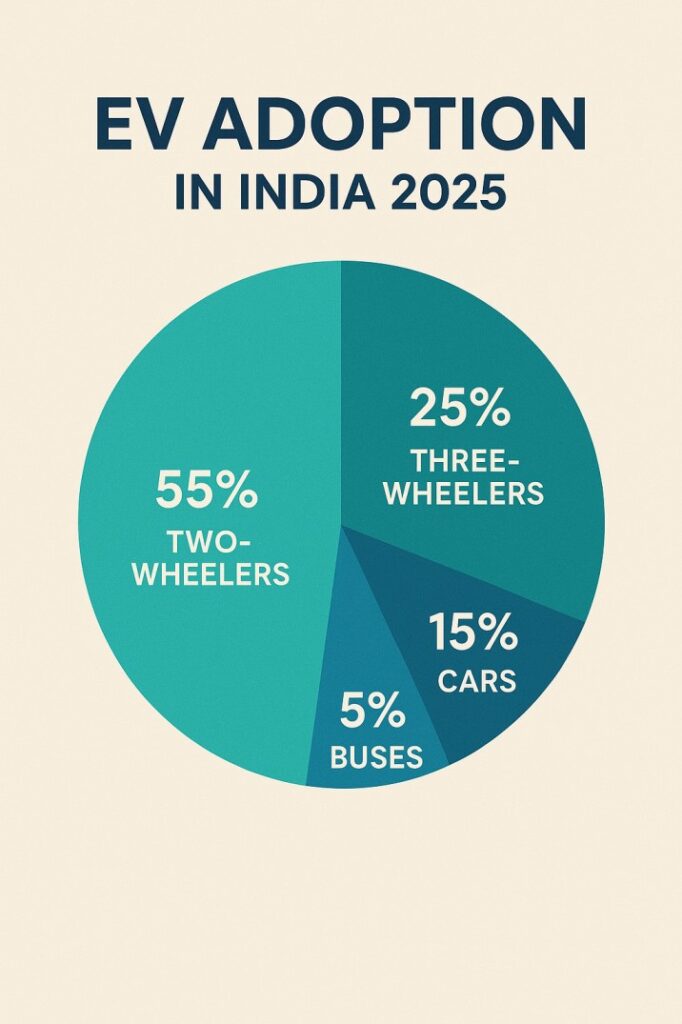
- Two-wheelers and three-wheelers make up most of the sales.
2. Government Support
- FAME II scheme (Faster Adoption and Manufacturing of Electric Vehicles) offers subsidies.
- Many states like Delhi, Maharashtra, and Tamil Nadu provide tax breaks and free registration.
3. EV Models Expanding
- From budget-friendly scooters (Ola Electric, Ather) to premium cars (Tata, Hyundai, BYD).
- Indian companies are entering the market strongly.
4. Charging Network Growth
- By 2025, India has over 10,000 public charging stations, but demand is still much higher.
- Private companies like Tata Power and startups are building fast-charging hubs.
⚡ Challenges Facing EV Adoption
1. High Battery Costs
- Batteries form nearly 40% of an EV’s price.
- India still imports most of its lithium, making EVs costly.
2. Charging Infrastructure Gaps
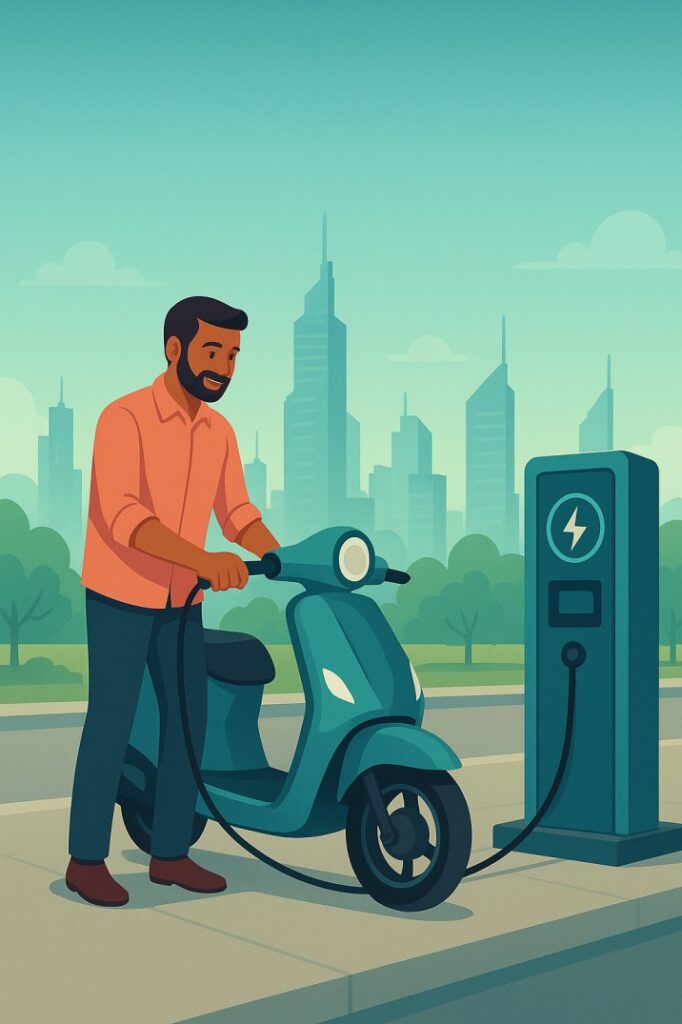
- While metro cities have charging points, smaller towns lack proper facilities.
- Range anxiety remains a big concern for buyers.
3. Long Charging Time
- Even with fast chargers, it takes 30–60 minutes to charge.
- Petrol refueling takes just a few minutes, so people hesitate.
4. Limited Local Manufacturing
- India is still dependent on imports for batteries and key EV components.
- This raises prices and delays supply.
5. Consumer Awareness
- Many still worry about resale value and battery life of EVs.
🚗 Future of EVs in India 2025 and Beyond
Despite the challenges, EVs are set to transform India’s transport.
- By 2030, the government targets 30% of vehicles to be electric.
- EV adoption will be fastest in two-wheelers, three-wheelers, and public transport.
- Indian startups will play a big role in battery tech and charging solutions.
- EV prices will drop as local manufacturing and battery recycling improve.
- Smart cities will integrate EV charging with solar and renewable energy.
📊 Fact: NITI Aayog predicts India’s EV market will be worth $200 billion by 2030.
🌍 Why EVs Matter for India
- Reduce oil import costs (India spends billions on fuel).
- Lower air pollution in major cities.
- Support green energy and climate goals.
- Create millions of new jobs in EV manufacturing, battery tech, and charging networks.
Conclusion
Electric vehicles in India 2025 are no longer a luxury—they are becoming a necessity. From affordable scooters to premium EV cars, adoption is rising fast. Yes, challenges remain, but with strong government policies and industry innovation, EVs will shape India’s green future.
If India solves charging and battery cost issues, the country could become a global EV leader by 2030.
FAQs
1. Are EVs cheaper than petrol vehicles in India?
EVs cost more upfront but are cheaper in the long run due to lower running and maintenance costs.
2. How many charging stations does India have in 2025?
Over 10,000 public charging stations, with more being installed every month.
3. Which companies lead EV sales in India?
Ola Electric, Ather, Tata Motors, and BYD are top players.
4. How long do EV batteries last in India?
On average, 6–8 years depending on usage and charging patterns.
5. Will EVs replace petrol vehicles completely?
Not fully, but by 2030, a large part of two-wheelers and city transport will be electric.
📢 Call to Action (CTA)
India is driving into an electric future. Are you ready to switch? 🚗⚡
Subscribe now for more updates on EVs, clean tech, and the future of transportation in India.